Q and A with Elinfrom Örnsköldsvik (Oernskoeldsvik), Sweden
“I believe we all have a unique “spark”—a signature energy that, when expressed fully, naturally attracts the right people, opportunities, and impact.”
Q: What are you passionate about?
A: I’m deeply passionate about human potential—the evolution that happens when we face our fears, embrace our challenges, and begin to live in alignment with who we truly are.
From a young age, I was drawn to personal development and understanding why we do what we do. That curiosity has shaped both my own growth journey and the work I do today.
I now coach multi-passionate and purpose-driven entrepreneurs who have big visions but often find themselves stuck in self-doubt or overthinking the launch process.
Through my work—and through Aligned Empowerment, the accountability community I co-founded—I help people bridge the gap between inspiration and execution.
My mission is to create spaces where dreams don’t just stay as ideas, but turn into tangible results through clarity, mindset work, and consistent action.
Q: What were your younger years like?
A: I grew up with loving parents, yet I internalized the belief that love and approval had to be earned through performance.
That pattern of overachieving and striving for perfection shaped much of my early life—in school, sports, and even relationships.
Eventually, that same drive became both my biggest strength and my greatest teacher. It taught me the importance of balance—of finding self-worth beyond productivity, and of allowing rest, creativity, and joy to have a place alongside ambition.
This realization later became a cornerstone of my coaching: that sustainable success comes from alignment, not exhaustion.
Q: What is something valuable you’d like others to know?
A: For much of my life, I tried to fit in—to belong. But the more I tried, the more disconnected I felt from myself.
My journey took me all over the world, from yoga trainings in India to retreats and entrepreneurship in Europe, searching for a sense of “home.” What I discovered was that home isn’t a place—it’s a state of being that comes from honoring who you are, even when it doesn’t fit the mold.
When I finally allowed myself to show up authentically—imperfect, multi-passionate, and real—everything started aligning. The right people appeared, opportunities opened up, and confidence followed.
But I also realized that embodiment alone isn’t enough—we need structure to sustain our flow.
The feminine creative energy needs the masculine framework of accountability and systems to thrive. That realization became the foundation for Aligned Empowerment—a space that combines heart, strategy, and accountability to help others create real momentum toward their goals.
Q: What does feminism mean to you? A: To me, feminism is about freedom—the freedom to choose your own path, express your truth, and define success on your own terms.
It’s about honoring both the strength and softness within us, and supporting other women to rise without dimming our own light.
Feminism, for me, is also deeply practical: it’s creating structures where women can thrive—financially, emotionally, and creatively—without burning out or compromising their authenticity. That’s the essence of what I strive for in my coaching and community work.
MORE ABOUT ELIN: I believe we all have a unique “spark”—a signature energy that, when expressed fully, naturally attracts the right people, opportunities, and impact. My work is about helping people reconnect with that spark, build the confidence and structure to protect it, and design a life that feels both aligned and empowered.
A: For many years, I struggled with confidence, crippling anxiety, sensory sensitivities, problems focusing, and overall not seeming to really fit in anywhere.
After discovering my love of art and practicing creativity, my friends stated that it was like I suddenly “came alive.” I found something that allowed me to express everything I was going through in a way that I couldn’t with words. This “ah-ha” moment sparked a desire to help others discover how to use their creativity as a means of healing, improving well-being, and using their unique voice through visual language.
Over the years, so many people have shared their desire to create, but are held back by the assumption that a person must be born with talent in order to practice creativity. They let the fear of failure of a “horrible end result” keep them from even trying. Sometimes they may give creativity a try, but then feel so overwhelmed with no guidance that the supplies just end up collecting dust on shelves.
To help with overcoming the limiting mindset that they can’t create, I decided to curate craft kits that included supplies and instructions to alleviate not knowing where to start. This is how DIYvinci was born. Today, we also carry individual art supplies, online courses for more in-depth support, and a free online community to connect with creatives of every skill level.
The name for DIYvinci was created with the intention of being a unique business name that would focus on art and creativity. It is inspired by Leonardo da Vinci, one of the most influential painters in Western art history. The name DIYvinci represents the idea that anyone can be creative and express themselves through various media, just like Leonardo da Vinci did through painting, sculpting, architecture, and science.
The following quotes by Leonardo da Vinci highlight the embodiment of the vision for DIYvinci in that art and creativity aren’t only skills to be mastered but are a reflection, connection, and understanding of ourselves:
“The painter who draws merely by practice and by eye, without any reason, is like a mirror which copies everything placed in front of it without being conscious of their existence.” —Leonardo da Vinci
“Where the spirit does not work with the hand, there is no art.” —Leonardo da Vinci
Our future goals include developing sensory crafting kits for neurodivergent adults, producing courses that are created by artists with different disabilities to teach how art and crafting are still possible using different methods, and developing a therapeutic interactive art journal.
A: I grew up in a small rural town surrounded by corn fields in central Illinois. The house that I lived in with my parents had been in my family for over 150+ years. I am a middle child with an older sister and a younger brother. I was always a very quiet and overall reserved kid who had trouble making and keeping friends on my own and often relied on my older sister or parents to make introductions. The most common question I was asked growing up was, “Why are you so quiet?” My typical answer usually included a nervous giggle paired with a shrug and a simple response of “I don’t know. I just am.” This was usually met with disappointment as if the asker had been expecting an in-depth revelation of past trauma that would explain why I wasn’t like everyone else. How could I answer what I didn’t understand? How could I explain that what seemed so odd to everyone else was what came naturally to me? That it was a defense mechanism used to function in a society not designed for me. My lack of an answer made it all too easy for others to insert answers of their own. “Jennifer is just shy. Jennifer is too nice. Jennifer is a suck-up. Jennifer is controlling. Jennifer is just stuck up. Jennifer is a goody-two-shoes. Jennifer doesn’t care. Jennifer is boring. Jennifer is lazy. Jennifer is awkward. Jennifer is a nobody.”
Between my lack of confidence, learning, and social difficulties, and not fully understand myself, I found myself believing these answers and withdrew further into myself as a means of survival. Over the years, anxiety continued to build leading to full-out panic attacks, but I was still left without words to express what I was truly feeling inside. I believe my faith in God, my family, and my friends kept my head above water in my high school and college years. In college, I studied Web Systems with the intention of becoming a web designer. However, after graduation, I was met with nothing but silence from potential job opportunities. At this point, I was earning only around $500 a month in my part-time library job and was quickly becoming desperate to become more financially stable. I eventually landed a data entry job that I would remain at for the next 8 years. This opportunity taught me so much, opened me up to meet so many awesome people, and helped get me into a much better financial situation.
About 4 years into this job, I started to hit burnout. I didn’t recognize the signs at first, but they continued to build to a point where it was nearly impossible to function yet I still pushed through, day in and day out. In the last year of my job, I finally began to realize what was going on. I discovered I was autistic and was in a huge autistic burnout. My primary doctor referred me to a psychiatrist and during this appointment, it quickly became apparent that this NP didn’t have a lot of knowledge about autism in females or adults in general. I was told that because I was able to have a conversation and appeared intelligent that it wasn’t worth pursuing a diagnosis. I became frozen. For what felt like the millionth time in my life, I was once again left with more questions than answers. My emotions flooded over me and it was a struggle to even continue with the appointment. I did what I normally do and shut down, hiding everything, and simply went along with the conversation. It’s like being shoved in the backseat of a car that is way too small for an adult while the driver goes where they please, not seeming to notice your discomfort. Afterward, I cried. I had spent so much energy deciding to take this step just to be abruptly shut down and made to feel like I wasn’t even worth someone’s time. I began to wonder why I was putting myself through all this discomfort. Maybe I should just accept the answer that I was just an anxious person and give up.
However, giving up isn’t in my DNA. Not only am I curious, but I’m also stubborn. I refused to just leave this as it was. I started this year making changes, and I wasn’t about to stop until I had the answers I needed. That is when I discovered Dr. Natalie Engelbrecht from Embrace ASD. Not only did Dr. Engelbrecht offer assessments and diagnoses for adults with autism, but she is autistic herself. It didn’t take me long at all to decide to go forward with the assessment with her. Less than a week later, I got my report back. The first few lines read: Suspected Diagnosis: Autism Spectrum Disorder. While I did cry after reading this report, it wasn’t like before. This time, I was heard. This time, someone took the time to read through my struggles and validate that I’m not weird, crazy, or another forgotten statistic. For the first time, I felt like I could say, “I am autistic and I no longer have to pretend to be anything I’m not.”
I eventually was diagnosed officially as autistic, ADHD, dyspraxic, and dyslexic. These labels finally gave me words for my lifelong struggles and opened the door to begin to accept myself for who I am. At close to 8 years, I left my data entry job in pursuit of being a full-time entrepreneur. I had already been operating DIYvinci for over 4 years by this point and was determined to see it flourish.
While my business still isn’t earning enough to support me, I was recently given a huge opportunity through Synergies Work with both a business grant and an 8-week entrepreneurship learning program. For the first time in a long time, I felt like someone finally saw value in what I was doing and was willing to go to bat for me. Aarti, Shlok, and the whole Synergies Work team brought back a spark I feared I was losing.
Q: What is something valuable you’d like others to know?
A: One thing I have learned over the years is that isolation doesn’t support growth. While I often retreated to isolation as a kid as a means of self-protection, I don’t allow myself to stay in that state for long anymore. I’ve learned that it is okay to ask for help and that I don’t have to do everything on my own. Connection with a community provides support, accountability, and an exchange of ideas that push you outside of your comfort zone. I highly recommend everyone seek out a community they relate with, that is encouraging, and that can help them see things from a new perspective.
Q: What does feminism mean to you?
A: To me, feminism means opportunity. Many cultures can easily stereotype women into certain categories and when a woman attempts to do something outside those categories she’s often seen as weird. Feminism is when we shift this perspective and view women as valuable, and human, and are celebrated for our differences. As someone who entered the technology field and entrepreneurship – both of which are primarily dominated by men–I’ve witnessed firsthand how women can be overlooked and discriminated against simply because of being a woman. I believe respecting others equally as fellow human beings is the essence of feminism.
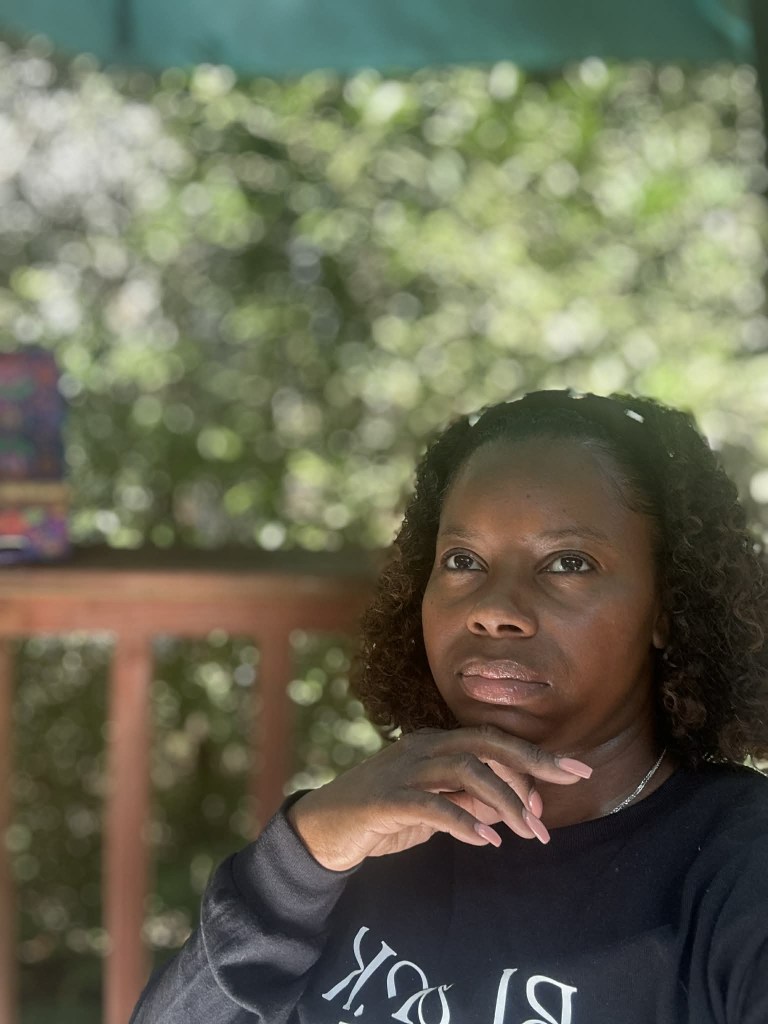
“I grew up in a not-so-nice area as a kid, but I know that it has made me who I am today because if I was raised anywhere else, I don’t think I would have as thick of skin today as a mom of three.”
Q: What are you passionate about?
A: My biggest passion has been and still is helping people. I have been a registered massage therapist for the past 13 years and this was my goal when I was in high school as I had taken a course on the body and fell in love with what I would be able to help with.
I am loving what I do and, over the early part of the pandemic, I got my life license. I had no idea what I was going to get out of it, but WOW! I was shocked at all that I learned and now could educate others and help plan/protect their families.
Then I started an online business in the essential services industry. This is where I have been able to provide my customers with better rates on services, they pay for in the home such as natural gas, electricity, internet, mobile, home phone, travel, and health care.
Q: What were your younger years like?
A: My younger years were amazing because I was always out and about playing, or we were at the Boys and Girls Club after school and evenings program where we went on many fun outings and once took a Tim Hortons camp trip to Alberta.
We often traveled back to Jamaica and the US for a few weeks and see family. I played many, if all the sports I could in school, up until high school, as I then became focused on my studies.
Q: What is something valuable you’d like others to know?
A: I grew up in a not-so-nice area as a kid, but I know that it has made me who I am today because if I was raised anywhere else, I don’t think I would have as thick of skin today as a mom of three.
I don’t look at where I came from as a bad thing because I know it gave me humble beginnings and some to look back and see how far I’ve come. Even though many kids didn’t end up in a good place as an adult, I can safely say my siblings and I all went on the great things in life.
Q: What does feminism mean to you?
A: Feminism to means….to be honest, I don’t give it much thought because I teach all three of my kids to not think they can or can’t do anything because of their size and sex.
Yes, the world doesn’t see a woman as equal to a man in some cases, but [it’s important to] know that we can do anything they can do if not do it better.
Q and A with Marcela born in Bogotá, Colombia, and living in Sydney, Australia
“Learn to believe in yourself more than anyone, keep pushing, and surround yourself with people who support you.”
Q: What are you passionate about?
A: Finding my passion wasn’t easy as I was not fixed on one specific subject or a collector. I always dreamt of finding my “passion,” trying different tests, people, books, etc.
I was lucky enough to finally find my passion after my third baby. She inspired me to keep fighting for her and my sanity to find real and long-term life solutions to help mothers and babies sleep better. This is how Lulo was born.
It’s a sleepy baby koala with a compilation of the best science-based sleeping methods to help your baby get to sleep. Find out more at www.kalmbaby.com.
I am passionate about motherhood, my family, baby sleep, “me time,” and having a balanced life.
Currently, we are working on refining our mother and baby daily guide routines; these are full-day routines from 0 to 3 years old.
Q: What were your younger years like?
A: Growing up, I loved playing sports with my younger brother. We had the best time together.
My dad was very strict, and there was zero room for mistakes. He taught me lots of manual stuff like fixing the iron or stove when they were not working at a very young age.
I think I was 12 years old when I aimed to open a TV, and I was fascinated with all the cables, electronics, etc. I remember breaking the bulb inside…luckily, there was a spare TV. And it was a secret between my brother and me.
I grew up in Bogotá, Colombia, where I had my first baby at a very young age. He is now 19 years old. Then I moved to Australia in search of a better life for my son, who I had to leave in Colombia for two painful years until I managed to bring him to Australia and achieve a massive and life-changing goal.
I have been living for the last 14+ years in Australia. I met the love of my life, who I married and we had two kids together (ages 4 and 2 years old). He supports me every step of the way, and I am extremely grateful to God for giving me such a unique and special husband.
Q: What is something valuable you’d like others to know?
A: Learn to believe in yourself more than anyone, keep pushing, and surround yourself with people who support you.
I have learned that healing yourself internally is possible with God’s help and the people he puts on our paths.
Everything has a reason. It may be something that you don’t think you need, but time covers our pain and time will uncover them again.
Q: What does feminism mean to you? A: To fight for equal gender benefits. We are still seeing many industries where there is a salary gap between women and men.
“I want others to take from my story that faith, persistence, and purpose-driven action can change the trajectory of your life.”
Q: What are you passionate about?
A: I am passionate about helping people build, protect, and pass on their legacies.
As both an attorney and real estate broker, my work sits at the intersection of law, property, and empowerment.
I found this passion by living it—I started as a teen mom with a GED, and step by step, worked my way to becoming a lawyer, broker, and business owner.
Today, I’m focused on bridging the gap between communities and the systems that impact them; whether that’s probate, real estate, or business law.
I’m currently working on expanding my law practice, growing my brokerage, and building technology and education platforms like my AMELIA AI Blueprint to help professionals embrace innovation while staying true to their faith and purpose.
Q: What were your younger years like?
A: I grew up facing challenges that forced me to grow up quickly.
Becoming a young mother while still in school was a turning point, but it gave me grit and resilience.
Education became my lifeline: from GED to college, and ultimately to earning my Juris Doctor degree.
Along the way, I worked in financial services, real estate, and legal support roles, each teaching me skills I still use today.
Those early years taught me perseverance, and that legacy isn’t just about wealth; it’s about showing up, pushing through, and proving to yourself that you can rewrite your story.
Q: What is something valuable you’d like others to know?
A: The most valuable lesson I’ve learned is this: your current circumstances do not define your destiny. Obstacles aren’t stop signs; they’re detours that can build strength and wisdom if you don’t give up.
I want others to take from my story that faith, persistence, and purpose-driven action can change the trajectory of your life.
You don’t have to come from privilege to build a legacy; you need the courage to keep moving forward.
Q:What does feminism mean to you?
A: To me, feminism is about agency, equality, and empowerment.
It’s about ensuring women not only have a seat at the table but also the tools, resources, and confidence to use their voice once they’re there.
As a Black woman in law and real estate, feminism also means breaking barriers and lifting as you climb—because true empowerment multiplies, it doesn’t compete.
More about Alisha: I believe in blending faith with professionalism. My journey is not just about contracts, closings, and courtrooms; it’s about legacy and purpose. Everything I build—whether it’s my law firm, my brokerage, or my empowerment platforms—is rooted in service, excellence, and leaving something greater for the next generation.